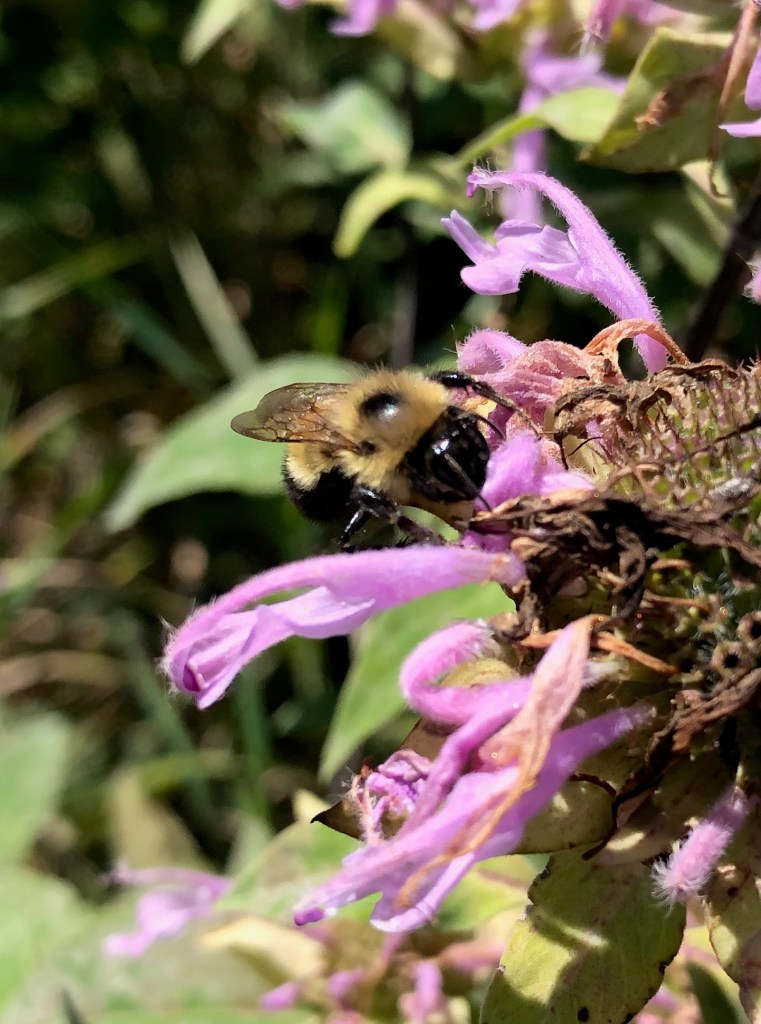
Wild Bergamot may be fading soon,
but Bumble Bee insists
there is still nectar to drink.

A swift breeze reminds me
autumn is coming
but not quite yet.
Cicadas still sing in the trees.

Sunlight shines through green leaves
and yellow petals
like stained glass.
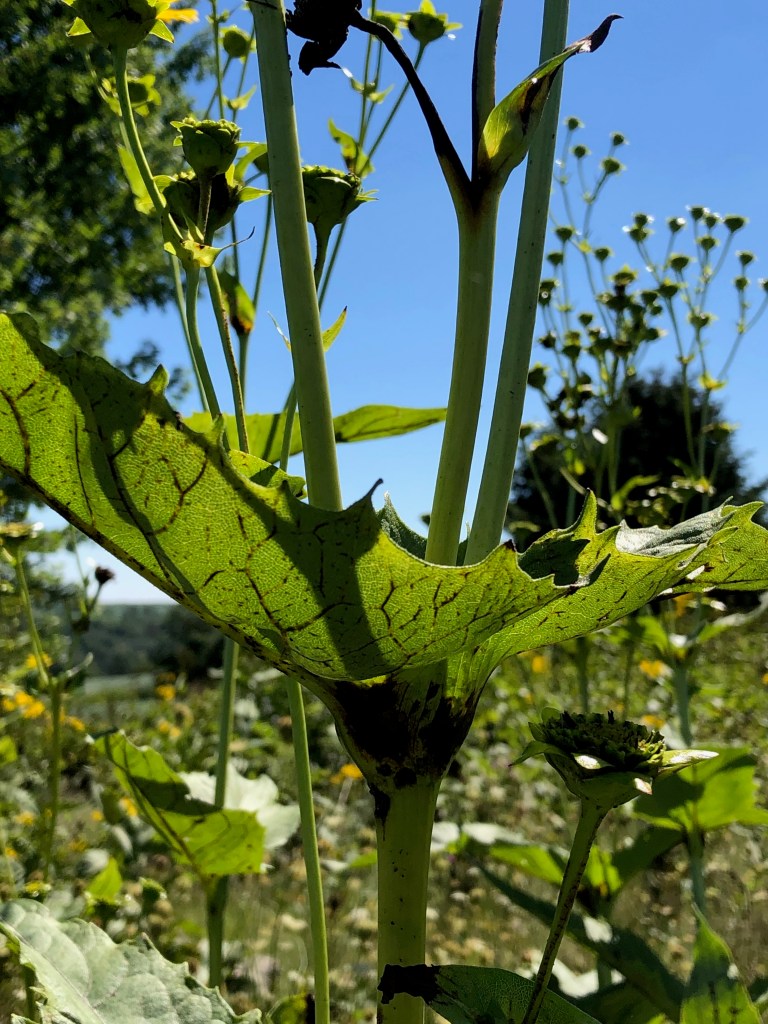
Nature’s rain collector,
the leaves of Cup Plant,
invite birds and insects to come
take a sip.

And shadows shift
through the long day
as we all keep changing.
So, let us take these moments
before summer’s end
and drink up!
Did you know you can eat these plants?
Learn how to harvest and eat Wild Bergamot (Monarda fistulosa L.) and Cup Plant (Silphium perfoliatum), and read the inspiring story of how Alan Bergo, a chef from Minnesota, became a mushroom & wild plant hunter, otherwise known as…a forager. He shares his foraging knowledge and recipes through his books and website at ForagerChef.com.
Foraging has been a relatively new interest for me, and I’m still getting my feet wet. Over the last eight years, my family and I have been transitioning sections of our land from a vast mowed lawn (by the previous owners) to native plants and even sections of prairie. I’ve been excited to learn that many of these native plants (or weeds, as some people still call them) are not only great for the birds and butterflies, but also edible for humans!
You, too, can become a forager. Keep in mind, you shouldn’t go eating just any mushroom or berry you find; some can be poisonous. Do your research, and be sure it’s edible before tasting it. And it’s important to harvest sustainably, so no plant is wiped out. As our plants fill in, I’m enjoying a nibble here and there.
Every time I walk past Bergamot, the aroma begs me to try making a cup of Bergamot Tea! I think this will finally be the year.
As we transition into September, one of my all-time favorite months in Wisconsin, I wish you all the best. However you choose to treasure these last summer moments–look and listen closely, reach out to touch, breathe it all in, and taste the flavors.
Drink up, my friends!
 Kate McKinney